

Understanding Mouth Cancer
A comprehensive guide to mouth cancer, including types, causes, risk factors, warning signs, diagnosis, treatment, prevention and supportive care.
What is Mouth Cancer?
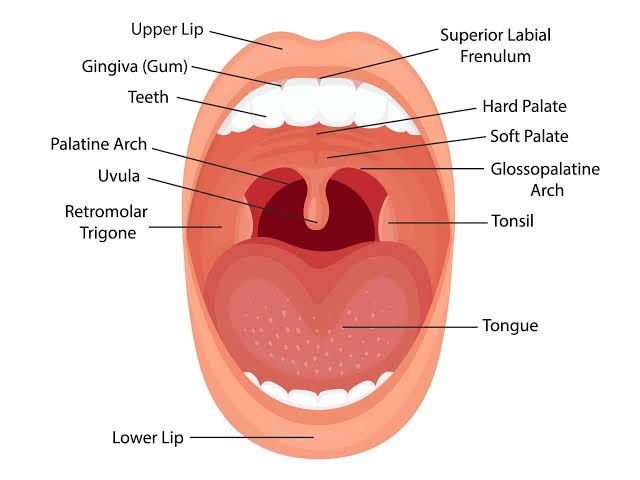
Mouth cancer, also called oral cancer, refers to cancers that develop in the mouth or oral cavity. It can affect areas such as the lips, tongue, inner lining of the cheeks, gums, floor of the mouth and roof of the mouth.
Mouth cancer can affect different people, but tobacco use and heavy alcohol consumption are important risk factors. Certain types of human papillomavirus (HPV) are also associated with some cancers of the mouth and throat.
Recognizing persistent changes in the mouth and obtaining timely medical assessment can help identify concerning conditions at an earlier stage.
Common Types of Mouth Cancer
Oral cancers can arise from different cell types and structures. Squamous cell carcinoma is the most common type of mouth cancer.
Squamous Cell Carcinoma
This is the most common type of oral cancer. It begins in squamous cells that line many areas of the mouth and oral cavity.
Verrucous Carcinoma
A less common, usually slower-growing form of squamous cell carcinoma with distinctive microscopic and clinical characteristics.
Mucoepidermoid Carcinoma
A cancer that can arise in salivary gland tissue. Its behavior and treatment depend on factors such as grade, location and extent of disease.
Adenoid Cystic Carcinoma
A salivary gland cancer that can involve structures of the oral cavity. Treatment depends on the tumor location, extent and individual factors.
Causes & Risk Factors
Several factors can increase the likelihood of developing mouth cancer. Some risks can be reduced through healthier lifestyle choices and appropriate preventive care.
Tobacco Use
Smoking and smokeless tobacco products are major risk factors for cancers of the mouth and other parts of the upper aerodigestive tract.
Alcohol Consumption
Heavy and prolonged alcohol consumption is associated with increased oral cancer risk, particularly when combined with tobacco use.
HPV Infection
Certain high-risk types of human papillomavirus are associated with some cancers of the mouth and throat.
Diet & Nutrition
Poor dietary patterns, including inadequate intake of fruits and vegetables, may be associated with increased risk.
Sun Exposure
Prolonged ultraviolet exposure can increase the risk of cancers affecting the lip, particularly in people with significant outdoor exposure.
Oral Health Factors
Certain long-term oral health problems and chronic irritation may warrant attention, although they do not by themselves mean that cancer is present.
Common Symptoms
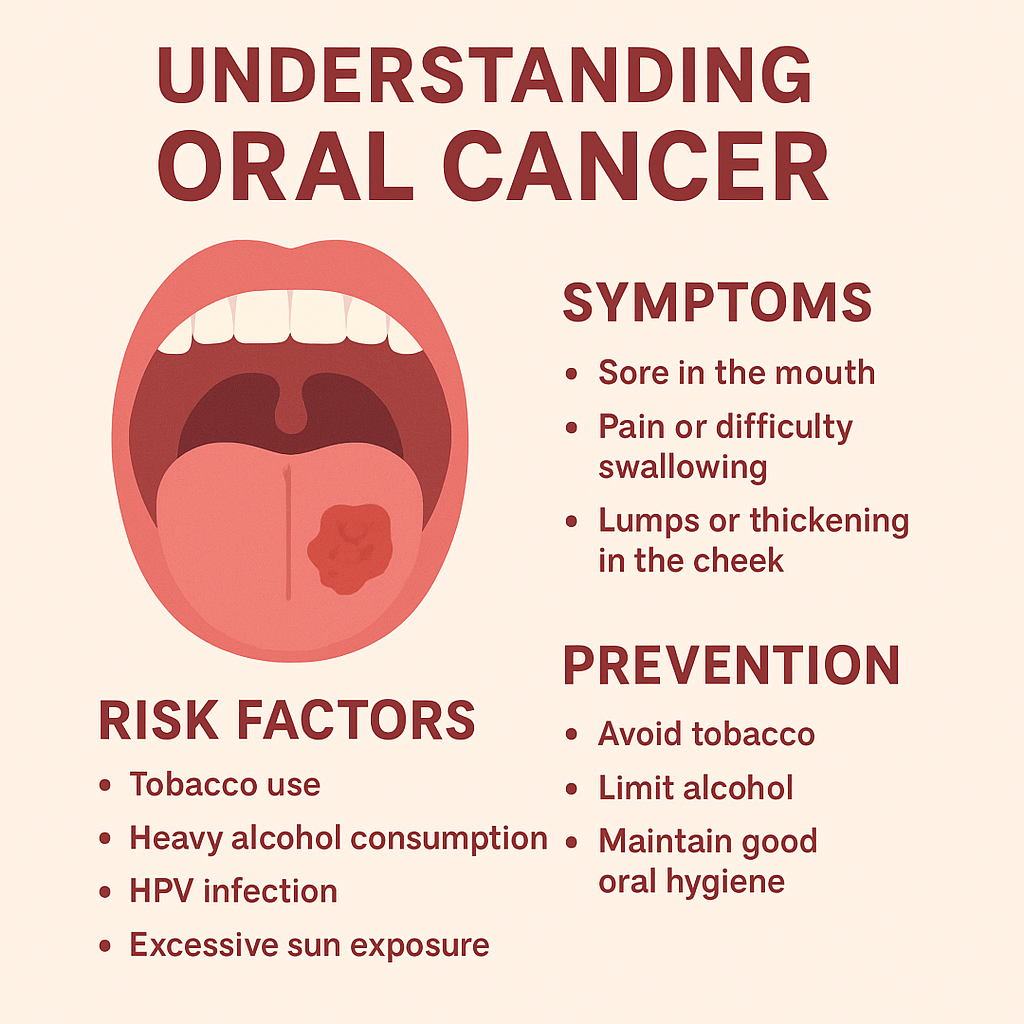
Symptoms of mouth cancer can resemble other oral health conditions. Persistent or unexplained changes should be assessed by a qualified healthcare professional.
Persistent Mouth Sores
A sore or ulcer in the mouth that does not heal should be medically assessed.
Lumps or Thickening
An unexplained lump, thickened area or unusual tissue change in the mouth or neck may require evaluation.
Persistent Oral Pain
Ongoing pain or discomfort involving the mouth, lips or tongue should not be ignored.
Difficulty Swallowing
Persistent difficulty or pain when swallowing may require further medical assessment.
Changes in Speech
Persistent changes in speech or voice can occur with conditions affecting the mouth and throat.
Loose Teeth
Unexplained loosening of teeth can have several causes and should be evaluated by a dental or medical professional.
Diagnosis & Evaluation
Evaluation of suspected mouth cancer may involve a physical examination, tissue sampling and imaging. The exact tests depend on the location and characteristics of the suspected lesion.
Physical Examination
A healthcare professional examines the mouth, throat, jaw, neck and surrounding areas for abnormalities.
Biopsy
A tissue sample is collected and examined under a microscope to determine whether cancer is present.
CT Imaging
CT scans can help assess the primary tumor and nearby structures and may assist with staging.
MRI / PET
MRI or PET imaging may be used in selected cases to evaluate soft tissues or assess the extent of disease.
Mouth Cancer Treatment Options
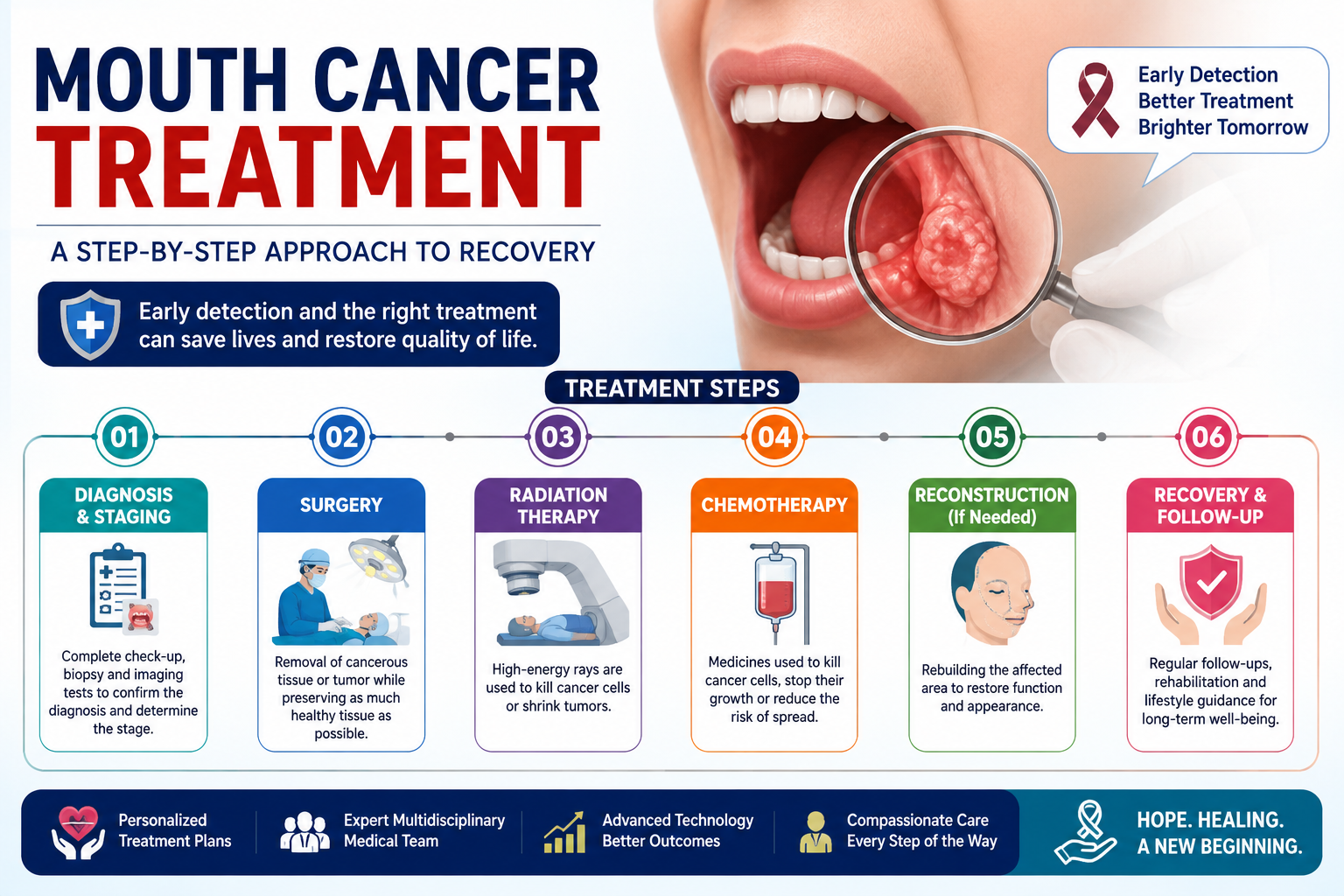
Treatment depends on the cancer type, location, stage, overall health and individual treatment goals. Different approaches may be used alone or in combination.
You Don't Have to Navigate It Alone
A diagnosis of mouth cancer can be physically and emotionally challenging. Healthcare professionals, dental specialists, caregivers, family members and support organizations can provide guidance throughout diagnosis, treatment and recovery.
Important Awareness Points
Awareness of risk factors and persistent oral changes can encourage timely evaluation. Several lifestyle measures can also help reduce preventable risks.
Avoid Tobacco
Avoiding smoking and smokeless tobacco is one of the most important steps for reducing oral cancer risk.
Limit Alcohol
Reducing alcohol consumption can lower exposure to an established oral cancer risk factor.
Pay Attention to Oral Changes
Persistent sores, lumps, unexplained bleeding or other unusual changes should be evaluated.
Protect Your Lips
Appropriate protection from prolonged ultraviolet exposure can help reduce the risk of sun-related damage to the lips.
Maintain Oral Health
Regular dental care and attention to persistent oral problems can support overall oral health.
Seek Medical Advice
Do not ignore persistent or unexplained mouth or neck changes. Early professional evaluation can help determine the appropriate next steps.
Medical Information Disclaimer
This page is intended for general educational and awareness purposes only. It should not replace professional medical advice, diagnosis or treatment. Individuals should consult a qualified healthcare professional regarding symptoms, diagnosis, screening, treatment and follow-up decisions. Treatment for mouth cancer varies according to the type, location, stage, individual health factors and other characteristics of the disease. Medical decisions should be made in consultation with an appropriately qualified healthcare team.