

Understanding Uterus Cancer
A comprehensive guide to uterine cancer, including its types, risk factors, warning signs, diagnosis, treatment options, prevention and support.
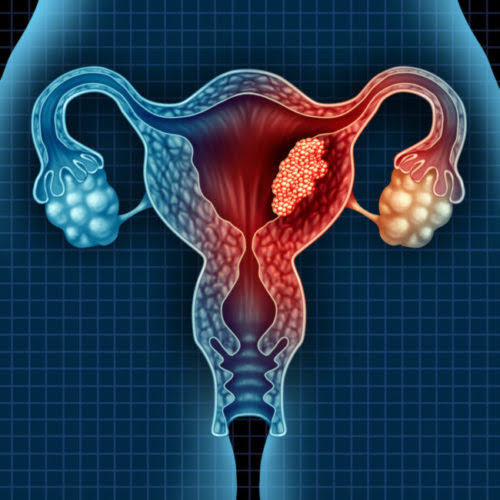
What is Uterus Cancer?
Uterine cancer is a cancer that develops in the uterus, the pear-shaped organ in the female reproductive system where pregnancy develops.
The most common uterine cancer is endometrial cancer, which begins in the lining of the uterus, known as the endometrium.
Uterine cancers can differ in their type, behavior and treatment. Recognizing symptoms and seeking appropriate medical evaluation are important parts of women's health awareness.
Common Types of Uterine Cancer
Uterine cancers can develop from different tissues within the uterus. Identifying the specific type is important because treatment and behavior can differ.
Endometrioid Adenocarcinoma
The most common type of endometrial cancer. It begins in the glandular cells of the uterine lining and may have different grades and characteristics.
Uterine Serous Carcinoma
A less common form of endometrial cancer that can behave more aggressively and may require specific treatment considerations.
Uterine Sarcoma
A group of uncommon cancers that develop from muscle or connective tissues of the uterus rather than the endometrial lining.
Carcinosarcoma
A rare uterine cancer with both carcinoma-like and sarcoma-like characteristics. It can require specialized evaluation and treatment.
Clear Cell Carcinoma
A relatively uncommon subtype of endometrial cancer with distinctive microscopic features and specific clinical considerations.
Other Rare Uterine Cancers
Other uncommon tumor types can occur in the uterus. Diagnosis by pathology helps determine the specific cancer and appropriate treatment approach.
Causes & Risk Factors
The exact cause of uterine cancer is not always known. Several factors may increase the likelihood of developing the disease.
Hormonal Factors
Long-term exposure to estrogen without enough progesterone can increase the risk of some endometrial cancers.
Age
Uterine cancer is more commonly diagnosed after menopause, and risk generally increases with age.
Obesity
Excess body fat can influence estrogen levels and is associated with an increased risk of endometrial cancer.
Diabetes
Diabetes is associated with an increased risk of endometrial cancer, although the relationship can involve several health and metabolic factors.
Family History
A family history of endometrial cancer or certain inherited cancer syndromes can increase risk.
Genetic Syndromes
Certain inherited conditions, including Lynch syndrome, are associated with a higher risk of endometrial cancer.
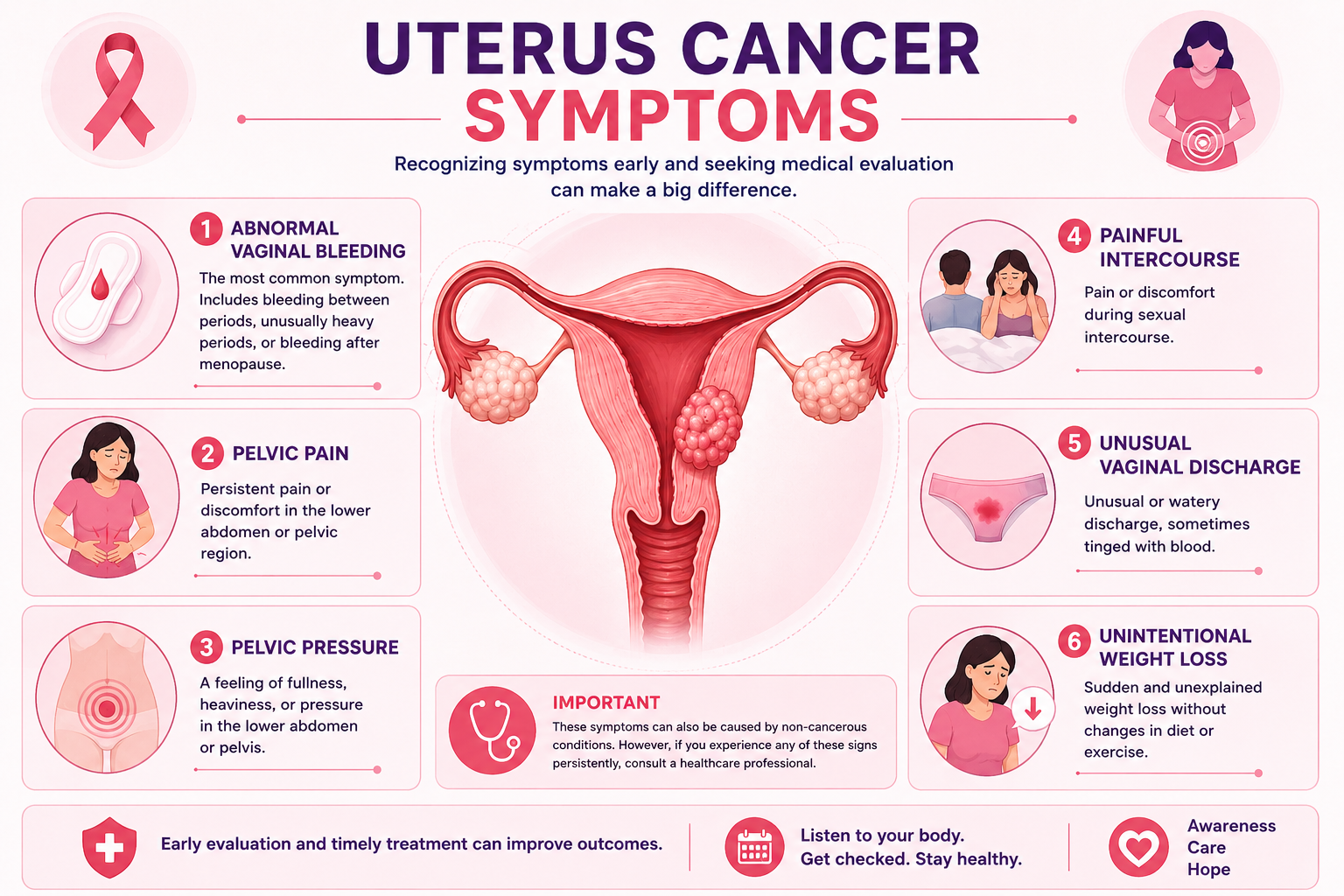
Common Symptoms
Uterine cancer can cause noticeable symptoms, particularly abnormal vaginal bleeding. Symptoms should be evaluated because they can also occur with many non-cancerous conditions.
Abnormal Vaginal Bleeding
Bleeding between periods, unusually heavy periods or bleeding after menopause can require medical evaluation.
Pelvic Pain
Persistent pelvic discomfort or pain may occur and should be assessed if unexplained or ongoing.
Pelvic Pressure
A feeling of fullness or pressure in the lower abdomen or pelvis can have several causes.
Pain During Intercourse
Pain or discomfort during sexual intercourse may occur and should be discussed with a healthcare professional when persistent.
Unusual Vaginal Discharge
Changes in vaginal discharge can occur and may warrant evaluation depending on the accompanying symptoms.
Unintentional Weight Loss
Unexplained weight loss can occur in some cancers and should be medically evaluated.
Diagnosis & Evaluation
Evaluation for suspected uterine cancer may involve examination, imaging and sampling of tissue. The exact tests depend on symptoms and clinical findings.
Ultrasound
Transvaginal ultrasound can provide images of the uterus and help evaluate the thickness and appearance of the endometrium.
Endometrial Biopsy
A sample of tissue from the uterine lining can be examined under a microscope to identify abnormal or cancerous cells.
Hysteroscopy
A thin camera may be used to examine the inside of the uterus and, when appropriate, obtain tissue from an area of concern.
Imaging & Staging
CT, MRI or other imaging studies may be used in selected cases to evaluate the extent of disease and assist treatment planning.
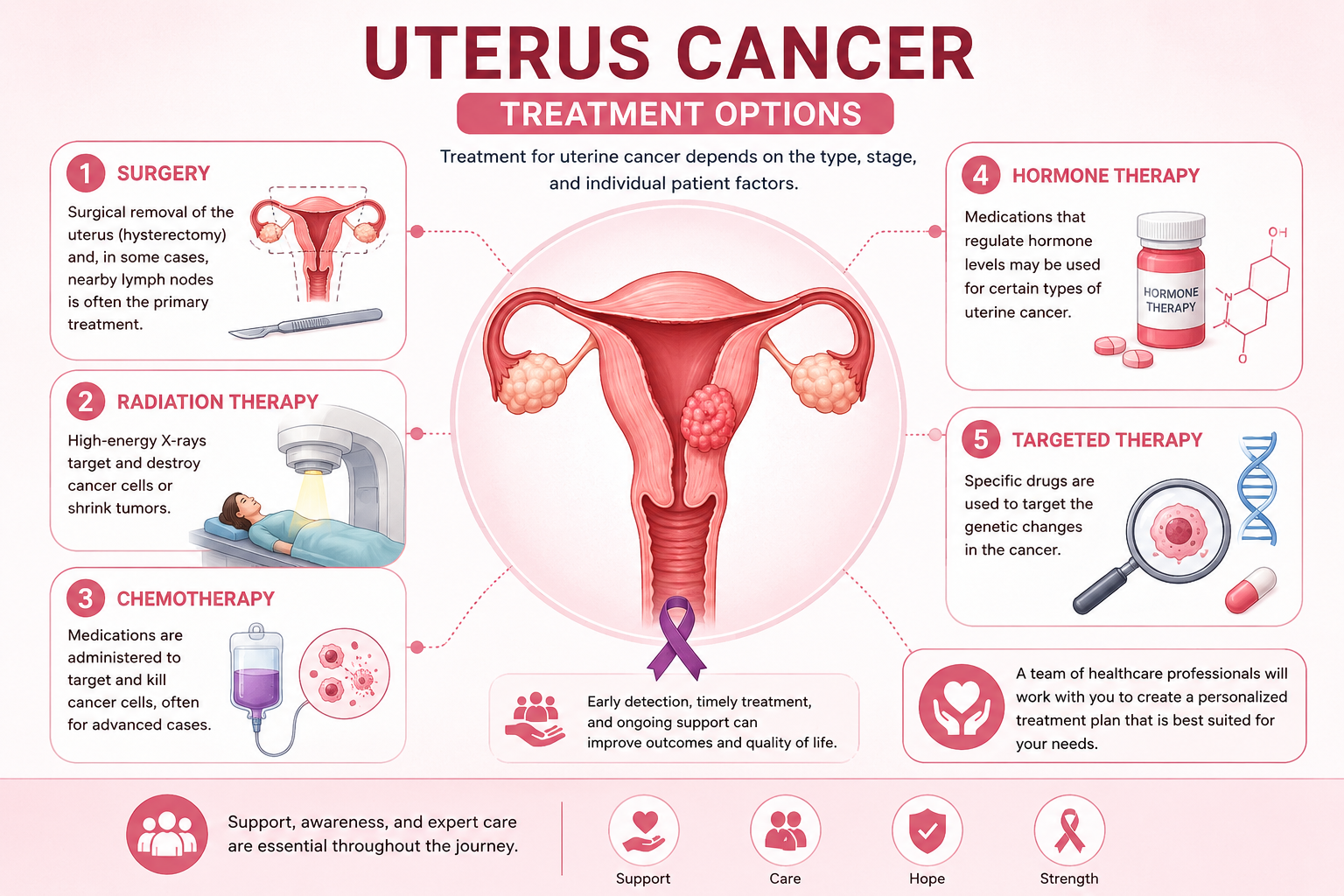
Uterus Cancer Treatment Options
Treatment depends on the type and stage of uterine cancer, tumor characteristics and the individual's overall health. Treatment may involve one or more approaches.
You Don't Have to Navigate It Alone
A uterine cancer diagnosis can affect physical, emotional and everyday wellbeing. A coordinated healthcare team, family members, caregivers and appropriate support organizations can provide guidance throughout diagnosis, treatment and follow-up.
Important Awareness Points
Understanding warning signs and seeking appropriate medical evaluation are important parts of uterine cancer awareness.
Don't Ignore Abnormal Bleeding
Unusual vaginal bleeding, especially bleeding after menopause, should be discussed with a healthcare professional.
Understand Your Risk
Age, obesity, hormonal factors, family history and certain inherited conditions can influence uterine cancer risk.
Seek Timely Evaluation
Persistent or unusual symptoms deserve medical attention rather than being ignored or assumed to have a harmless cause.
Know Your Family History
Discuss significant family cancer histories with your healthcare professional, particularly when several relatives have been affected.
Follow Your Care Plan
If diagnosed, follow-up appointments, pathology review and individualized treatment planning are important parts of ongoing care.
Seek Support
Healthcare professionals, loved ones, caregivers and appropriate support organizations can provide valuable practical and emotional support.
Medical Information Disclaimer
This page is intended for general educational and awareness purposes only. It should not replace professional medical advice, diagnosis or treatment. Individuals should consult a qualified healthcare professional regarding symptoms, screening, diagnosis, treatment and follow-up decisions. Uterine cancer treatment varies according to cancer type, stage, tumor characteristics, overall health and individual circumstances. Medical decisions should be made in consultation with an appropriately qualified healthcare team.